
A home carbon monoxide alarm can stay quiet even when a furnace heat exchanger is failing. That isn’t because the alarm is broken. Alarms listed to the UL 2034 standard are designed to sound only after CO reaches a certain level for a certain amount of time, and they’re designed not to sound at lower levels. Low or on-and-off CO can stay below those trigger points, and some people can still feel effects there.
What level of CO sets off a home CO alarm?
Residential CO alarms sold in the U.S. are built to UL 2034, the standard the >CPSC says to look for. It sets a response window for each CO level (>CPSC test report, Table 3; >First Alert/BRK):
| CO level in the air | Alarm must sound between… |
|---|---|
| 70 ppm | 60 and 240 minutes (1 to 4 hours) |
| 150 ppm | 10 and 50 minutes |
| 400 ppm | 4 and 15 minutes |
And just as important, what it must not alarm at:
- 30 ppm: alarms must not sound at a constant 30 ppm for 30 days (>First Alert/BRK; the >CPSC report describes the 30 ppm no-alarm tests). First Alert’s spec sheets say its sensors are adjusted not to detect levels below 30 ppm (>CO400B spec sheet).
- Before the window opens: because of the windows above, an alarm sitting in 70 ppm isn’t supposed to sound in the first 60 minutes, and one in 150 ppm isn’t supposed to sound in the first 10. The CPSC explains this is deliberate, to prevent nuisance alarms from brief CO spikes (>CPSC report).
In plain terms: a standard alarm is designed to warn you before CO becomes life-threatening, not to tell you that some CO is present (>CPSC).
CO levels and typical health effects (adults)
How CO affects you depends on the level, how long you breathe it, and your own health (>CPSC). These are general reference points, not a diagnosis:
| CO level | What it means / typical effects | Source |
|---|---|---|
| 0.5–5 ppm | Average range in homes without gas stoves | >EPA |
| 5–15 ppm | Often found near properly adjusted gas stoves; poorly adjusted stoves may be 30 ppm or higher | >EPA |
| 1–70 ppm (prolonged) | Most people have no symptoms, but some heart patients may have more chest pain | >CPSC |
| 35 ppm | NIOSH recommended workplace limit, averaged over 8 hours (based on heart effects) | >CDC/NIOSH |
| 50 ppm | OSHA workplace limit, averaged over 8 hours | >CDC/NIOSH |
| Above 70 ppm (sustained) | Symptoms become more noticeable: headache, fatigue, nausea | >CPSC |
| 100 ppm | May not affect a healthy adult after 20 minutes; may cause headaches after 4 hours | >First Alert/BRK |
| Above 150–200 ppm (sustained) | Disorientation, unconsciousness, and death are possible | >CPSC |
| 200 ppm | NIOSH workplace ceiling (never to be exceeded) | >CDC/NIOSH |
| 400 ppm | May cause headaches in healthy adults after 35 minutes; can cause death after 2 hours | >First Alert/BRK |
| 1,200 ppm | “Immediately dangerous to life or health” (NIOSH IDLH) | >CDC/NIOSH |
Notice the overlap: workplace limits sit at 35–50 ppm, and the CPSC notes some heart patients can be affected below 70 ppm, while a home alarm isn’t required to sound at 30 ppm at all, or at 70 ppm for the first hour.
Low-level exposure over time
The >EPA lists fatigue in healthy people and chest pain in people with heart disease as effects at low concentrations, and flu-like symptoms that clear up after leaving home among the effects at higher concentrations. The >CPSC warns that with slowly developing home CO problems, people and even doctors can mistake mild to moderate CO poisoning for the flu. Common symptoms include headache, dizziness, weakness, upset stomach, vomiting, chest pain, and confusion (>CDC).
Who is at higher risk
- Infants and young children, whose signs may be subtle (fussiness, feeding trouble, unusual behavior) (>CDC; >MedlinePlus/NIH)
- Older adults (>CDC)
- Pregnancy: CO can harm an unborn baby (>MedlinePlus/NIH)
- People with heart disease, lung or breathing problems, or anemia (>CDC)
- People who are asleep or under the influence, who can be overcome before noticing symptoms (>CDC)
If you or anyone at home has symptoms like these, get to fresh air and seek medical help. Call 911 if symptoms are severe or a CO alarm sounds.
Why a bad heat exchanger can stay under the alarm’s radar
The heat exchanger is the metal chamber inside a gas, propane, or oil furnace that keeps the burner’s combustion gases separate from the air the blower sends through your home. A crack, hole, or rust-through can break that separation. That doesn’t mean every damaged heat exchanger leaks CO into the house, but when one does, the amount isn’t always large or steady:
- The leak can be small. Some cracks are hairline, or only open when the metal heats and expands.
- It can come and go. The furnace cycles on and off, so any CO it adds comes in pulses rather than a constant level. Short spikes are exactly what UL 2034’s time windows are designed to ignore.
- It gets diluted. CO entering the ductwork mixes with house air, so the level at the alarm can be much lower than at the furnace.
- Combustion changes. How much CO the burners make depends on how cleanly they burn. The >EPA lists leaking or improperly vented furnaces among indoor CO sources.
- Alarm placement and age matter. An alarm reacts only to CO that reaches it. The test button checks the circuitry, not the sensor’s accuracy, and alarms have a replacement age (>CPSC).
The result can be CO that hovers in the tens of ppm, or rises for short periods, without ever meeting the level-and-time combination a standard alarm needs to sound.
For more on how heat exchangers fail and what to watch for, see How to Spot a Cracked Heat Exchanger, and Why It’s Important. If you’ve been told your heat exchanger is cracked and want to be sure, read Avoid the “Cracked Heat Exchanger” Scam This Winter.
Warning signs worth a call
None of these proves a cracked heat exchanger, but each is worth having checked:
- Burner flames that flicker, lift, or roll out when the blower starts, or look yellow or orange instead of mostly blue
- Soot around the burners, cabinet, or registers
- A sharp, burning, or exhaust-like smell when the furnace runs (if you smell gas, leave and call your gas utility or 911 from outside)
- A furnace that keeps shutting itself off or locking out
- Rust or corrosion in the cabinet, on the vent connector, or around the burners
- Headaches or flu-like symptoms that ease when you leave the house
A real example: what an inspection found in Shrewsbury
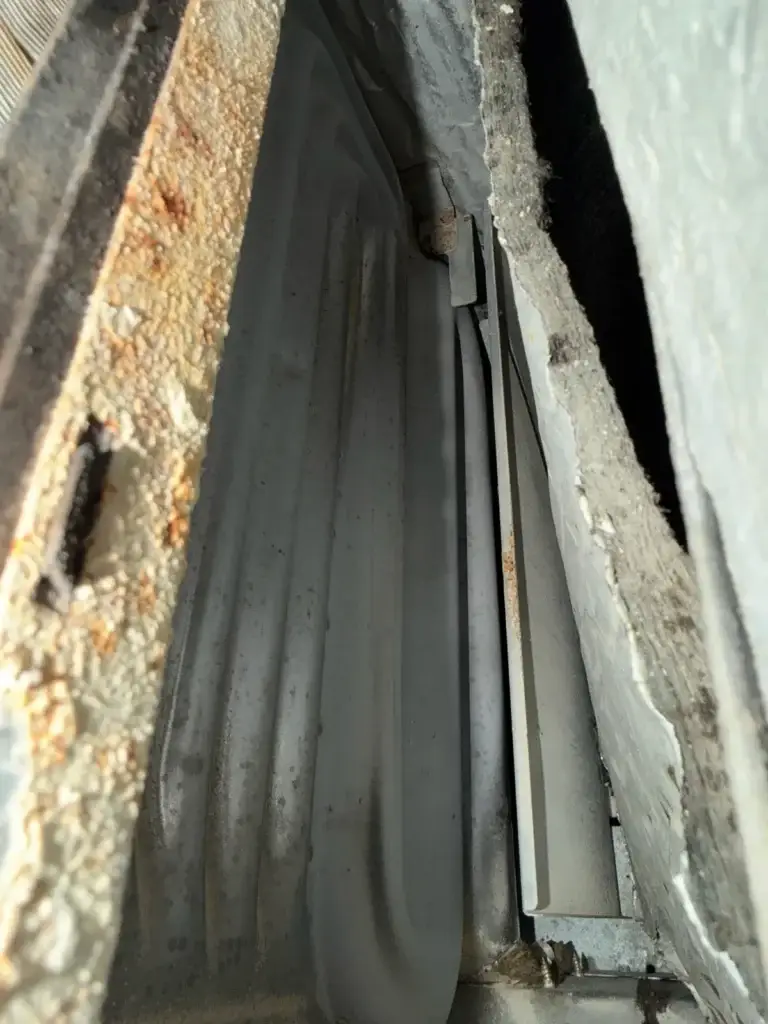
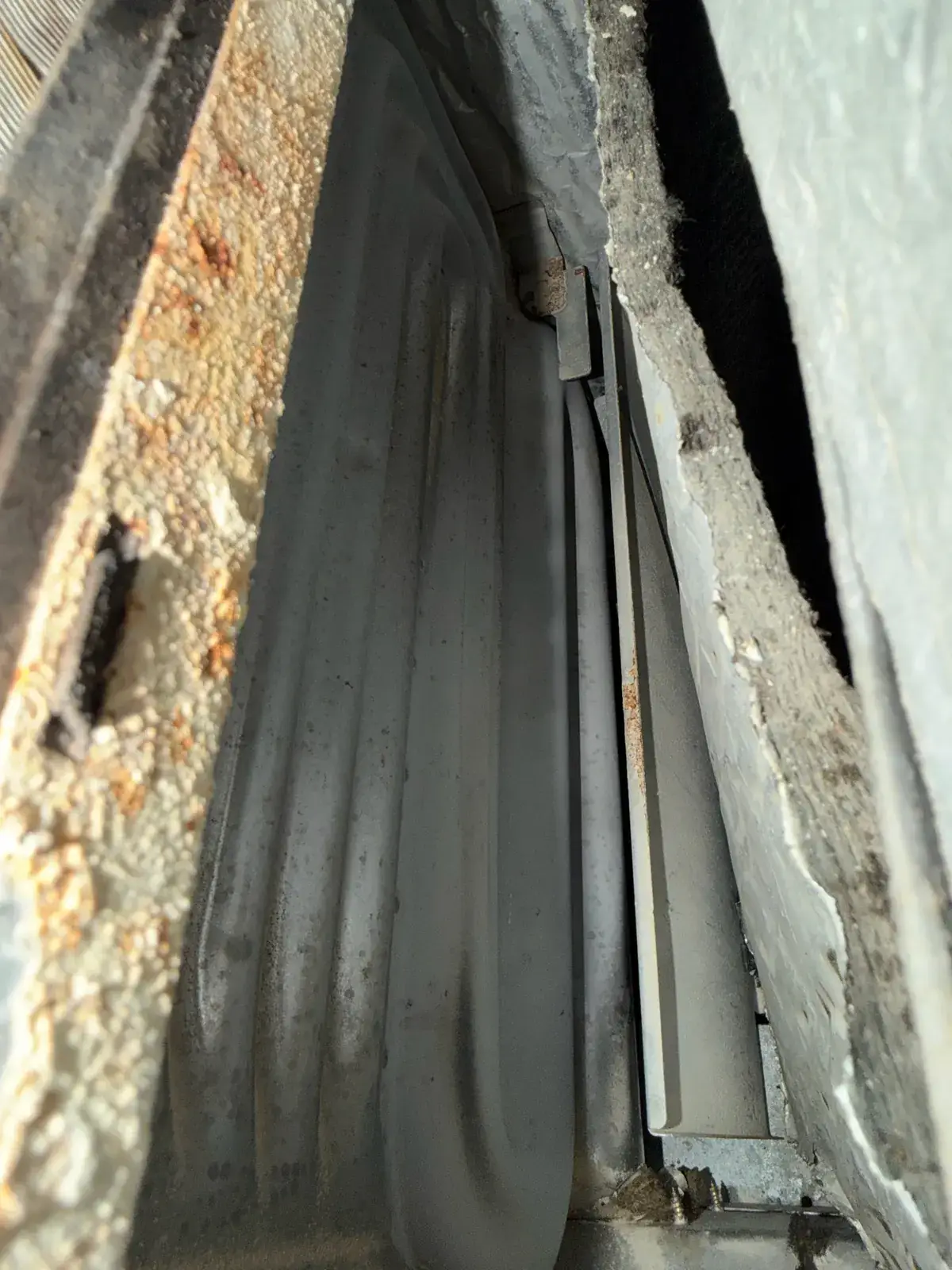
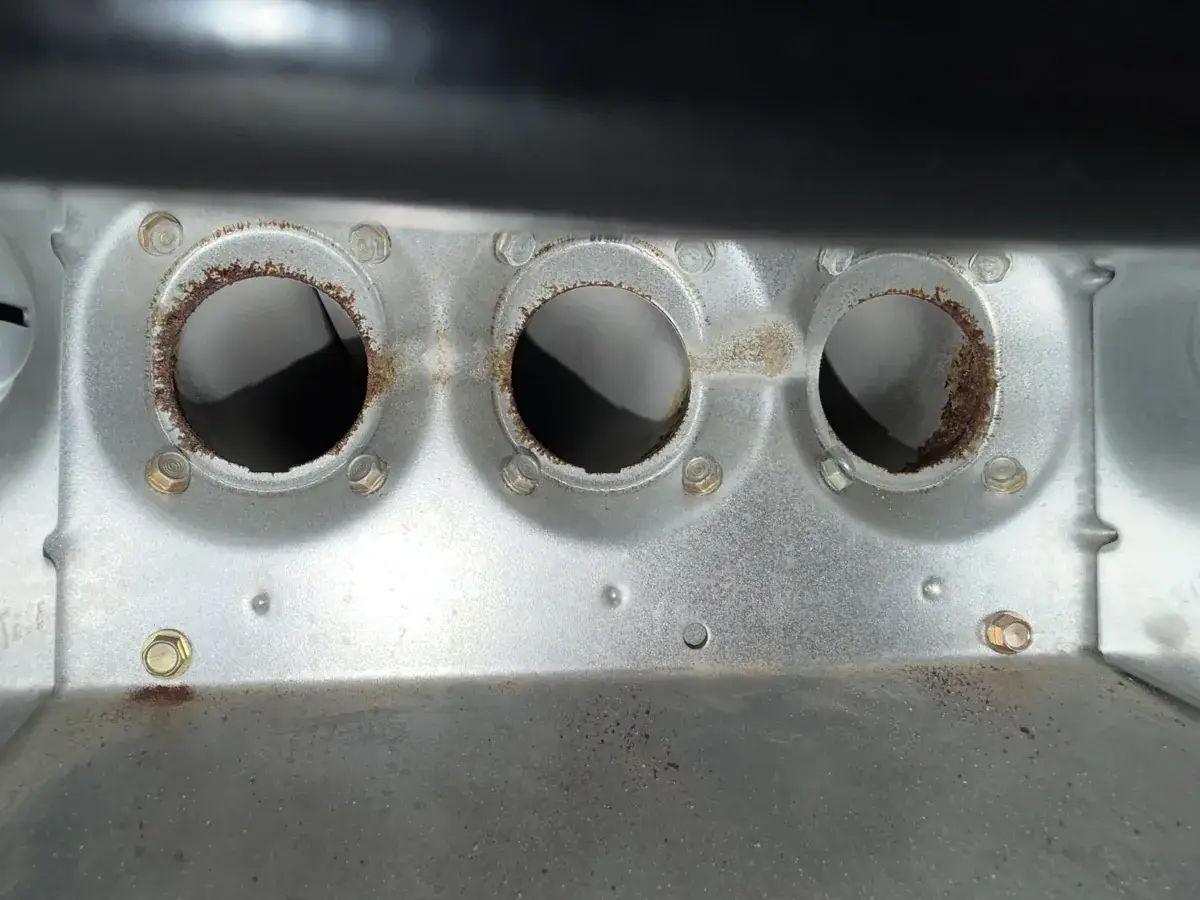
On October 22, during a routine maintenance visit on a gas furnace in Shrewsbury, PA, the homeowner hadn’t reported any problem. Once the furnace was opened up, here’s what turned up:
- The installation manual was still sitting in the bottom of the furnace, roughly ten years after it went in. It had been serviced by another company that whole time.
- The heat exchanger was heavily rusted, including around its openings.
- The evaporator coil was severely corroded and most likely leaking refrigerant.
- A universal igniter had been installed that didn’t fit properly.
The system was at the end of its life. Replacement options had been shared earlier in the year, and the homeowner is moving forward with a new system. The lesson: nothing seemed wrong from the outside. Opening the equipment and actually looking is what showed the problem.
The takeaway: a low-level CO monitor plus a yearly furnace inspection
- Keep your UL 2034 alarms, on every level and outside sleeping areas, and replace them on the manufacturer’s schedule (>CPSC).
- Add a CO monitor with a digital readout. The >CDC suggests considering a detector with a digital readout, which can show the highest CO level in your home, in addition to sounding an alarm. Look for one that displays low readings, so you can see a level that’s rising or that keeps coming back, even when it isn’t high enough to alarm.
- Have your furnace inspected every year. The >CPSC, >CDC, and >EPA all recommend annual professional inspection and service of home heating systems.
Air Comfort’s $59.99 fall tune-up covers general operation and safety checks for gas and propane furnaces and heat pumps, and it runs through November 15. If you’re worried about your heat exchanger, or a CO monitor is showing readings, mention it when you call and Air Comfort can inspect it during the visit. Learn more about furnace maintenance and current specials.
What to do if your CO alarm sounds
- Get everyone out to fresh air right away, and make sure everyone is accounted for.
- Call 911 from outside. Stay in fresh air until responders arrive.
- Don’t go back inside until responders say it’s safe.
- Don’t run the furnace again until it’s been checked (>CPSC). Air Comfort offers emergency heating service.
Call Air Comfort at (717) 855-4101 if:
- You notice any of the warning signs above, or a CO monitor shows readings
- Your furnace keeps shutting off or won’t stay lit (heating repair in York, PA)
- Your furnace is older, or you can’t remember its last inspection
- You’ve been told your heat exchanger is cracked and you’d like another look
The $109 diagnostic is waived if you approve the repair. If your furnace is at the end of its life, free in-home estimates are available for new heating installation.
FAQ
Why didn’t my CO detector go off if my heat exchanger is bad? Home CO alarms built to UL 2034 are designed to sound only after CO reaches a set level for a set time, such as 70 ppm for 1 to 4 hours, and not to sound at a constant 30 ppm for 30 days. A cracked heat exchanger may leak small or on-and-off amounts of CO that stay below those trigger points, or none at all, so a quiet alarm doesn’t confirm the heat exchanger is fine.
At what CO level does a home CO alarm go off? Under UL 2034, an alarm must sound between 60 and 240 minutes at 70 ppm, between 10 and 50 minutes at 150 ppm, and between 4 and 15 minutes at 400 ppm.
Can low levels of CO affect my health? It can for some people. The CPSC says most people have no symptoms from prolonged exposure to about 1 to 70 ppm, but some heart patients may have more chest pain. Above 70 ppm, headache, fatigue, and nausea become more noticeable. Infants, older adults, pregnant women, and people with heart or lung disease or anemia are at higher risk.
What are the symptoms of carbon monoxide exposure? Common symptoms are headache, dizziness, weakness, upset stomach, vomiting, chest pain, and confusion, and they are often described as flu-like. If you have symptoms, get to fresh air and seek medical help, and call 911 if they are severe.
Should I get a CO monitor with a digital display? The CDC suggests considering a detector with a digital readout, which can show the highest CO level in your home. One that displays low readings can show CO that is present but below the level a standard alarm needs to sound.
Does the $59.99 fall tune-up include a heat exchanger inspection? The $59.99 tune-up covers general operation and safety checks for gas and propane furnaces and heat pumps through November 15. If you’re concerned about your heat exchanger, mention it when you call (717) 855-4101.
What should I do if my CO alarm goes off? Get everyone outside to fresh air right away and call 911 from outside. Don’t go back in until responders say it’s safe, and have the furnace checked before you use it again.
How often should my furnace be inspected? Once a year, ideally before the heating season. The CPSC, CDC, and EPA all recommend having home heating systems inspected and serviced annually.
Air Comfort Technologies · 208 Plaza Drive, Manchester, PA 17345 · (717) 855-4101 · Factory-trained residential HVAC service across York County, PA · 400+ Google reviews
Schedule your $59.99 fall tune-up before November 15. Call (717) 855-4101.