Hearing the words "cracked heat exchanger" is stressful, especially when a York County cold snap is on the way and your furnace is the only thing keeping the house warm. This guide explains what a heat exchanger is, why a crack matters, how to recognize the warning signs, and how to feel confident about the diagnosis before you decide what to do next.
Air Comfort Technologies is a locally owned HVAC company in Manchester, PA, serving York County homeowners since 2015. We inspect furnaces of every brand, and we'll walk you through exactly what we find.
What Is a Heat Exchanger (and What Does "Cracked" Mean)?
The heat exchanger is the metal chamber inside a gas furnace that keeps the flame and its exhaust separate from the air that's blown through your home. Burners heat the inside of the chamber, the metal gets hot, and your blower pushes household air across the outside of it. The exhaust gases stay inside and vent out through the flue.
Every heating cycle, that metal expands as it heats and contracts as it cools. Over many years, thousands of those cycles can stress the metal until it develops a crack, a split seam, or a hole, often near bends and welds. Rust from condensation and airflow problems, like a clogged filter that makes the furnace run hot, can speed that wear along.
A "cracked" heat exchanger simply means the wall between the flame side and the air side is no longer sealed.
Is a Cracked Heat Exchanger Dangerous?
It can be. The main concern is carbon monoxide (CO), an odorless, colorless gas produced when fuel burns. A sealed heat exchanger sends CO up the flue. A breached one can let combustion gases mix with the air moving through your home, and it can also disturb the burner flame so the furnace burns less cleanly.
That's why, when a crack is confirmed, the furnace is usually shut off for safety. This is often called "red-tagging." It isn't a sales step. It's a standard safety precaution so the furnace doesn't keep running with a breached heat exchanger.
Whatever the condition of your furnace, a working CO detector on every level of your home, especially near bedrooms, is a must. If a CO alarm goes off, get everyone outside and call 911 or your gas utility from a safe place. For more on detectors, read our post on why a CO detector may not go off with a cracked heat exchanger.
Signs Your Heat Exchanger May Be Bad
A crack is often hidden deep inside the furnace, so you can't always see it yourself. These are the clues worth calling about:
- Soot or scorch marks around the burners, on the furnace cabinet, or near the vent connection.
- Flame rollout, where flames curl out of the burner area instead of going into the heat exchanger. Many furnaces will trip a rollout switch and shut down.
- Burner flame changes. A healthy flame is mostly steady and blue. A flame that wavers, jumps when the blower starts, or turns yellow or orange needs a look.
- A CO alarm that sounds while the furnace is running.
- Unusual odors, like a sharp, chemical, or burning smell when the heat is on.
- An older furnace. Many furnaces have heat exchanger issues as they reach the 15 to 20 year range.
Why a Cracked Heat Exchanger Usually Means Replacement
A cracked heat exchanger can't be safely patched, welded, or sealed. The metal keeps expanding and contracting, so any repair would open up again. The only true fixes are replacing the heat exchanger itself or replacing the furnace.
Which one makes sense depends on a few things:
- Warranty. Many manufacturers cover the heat exchanger longer than the rest of the furnace, so check your paperwork. If the part is covered, the main cost may be labor.
- Age. On an older furnace, a new heat exchanger plus labor can approach the price of a new furnace that is more efficient and carries a fresh warranty.
- Your AC. If your air conditioner is about the same age, replacing the furnace and AC together can save you a second install day and gives you matched equipment. Learn more about furnace installation and AC installation.
Install estimates are free, and every install comes with a 5-year labor warranty.
Real Job: Springettsbury Township Furnace Replacement
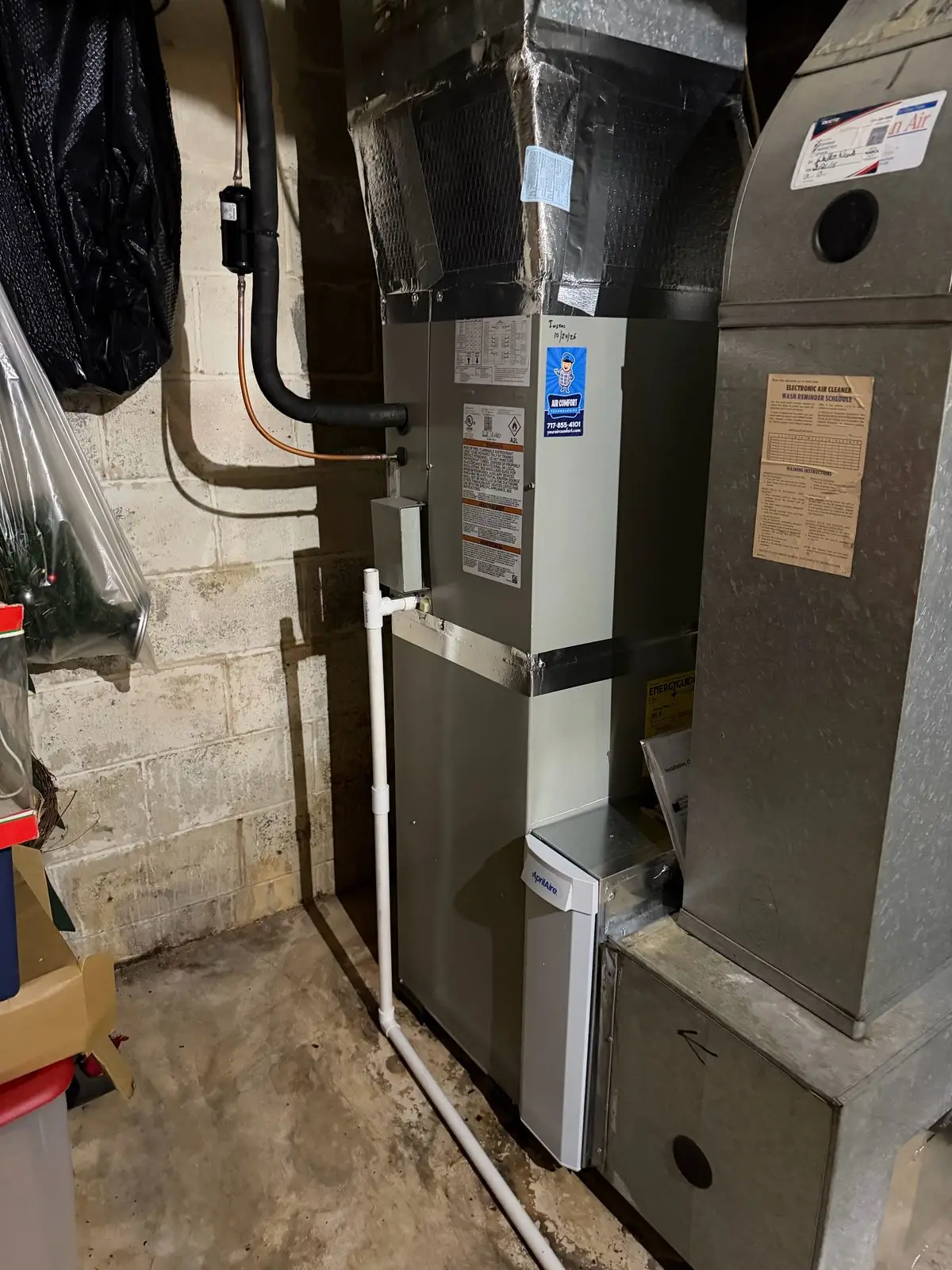
A Springettsbury Township home in York needed a new furnace after the existing one's heat exchanger went bad. Since the air conditioner was about the same age, the homeowners chose to replace the furnace and AC together.
We installed a Trane 2-stage 80% gas furnace, a Trane 16 SEER single-stage air conditioner, and an Aprilaire media air cleaner for better whole-home filtration. We hauled all the old equipment away, and the new system was ready right as heating season started.
How to Feel Confident About the Diagnosis
Some homeowners search for "cracked heat exchanger scam" because the news can come as a surprise and the decision is a big one. Asking questions is always reasonable. Here's how to get clear answers:
- Ask to see it. A photo or a camera inspection of the crack, rust-through, or separated seam helps you understand what was found.
- Ask what test was done. For example, a visual or camera inspection, a combustion analysis, or a check for flame changes when the blower starts.
- Get it in writing. Ask for the model and serial number, the findings, and the recommended next step on paper.
- Check your warranty. Look up whether your heat exchanger is still covered before you decide.
- A second opinion is always OK. If you'd like another look, we're happy to inspect your furnace and show you what we see.
Frequently Asked Questions
Can a cracked heat exchanger leak carbon monoxide? Yes, it can. A breach can let combustion gases into the air moving through your home and can disturb how the burners burn. That's why the furnace is usually shut off once a crack is confirmed, and why every home with gas heat should have working CO detectors.
Do Trane furnaces get cracked heat exchangers? Any brand of furnace can develop a cracked heat exchanger over time, including Trane, American Standard, York, and others. Age, heating cycles, and airflow all play a part. If you have a Trane furnace, check whether the heat exchanger is still under warranty.
Is a cracked heat exchanger a myth? No. Cracked heat exchangers are real and they're a genuine safety concern. It's also fair to ask to see the evidence, like a photo or camera view, before you make a decision.
Can you repair a cracked heat exchanger? Not safely. Cracks can't be welded or sealed for the long term. The fix is a replacement heat exchanger or a new furnace, depending on the furnace's age and warranty.
Schedule a Furnace Inspection or Free Install Estimate
Worried about your heat exchanger? Call Air Comfort Technologies at (717) 855-4101. Service calls start with a $109 diagnostic, and if you need a new furnace, install estimates are free. Financing is available on new systems, with a 10% military discount and 24/7 service. Need a furnace repair instead? We handle that too, and we can add a whole-house humidifier when you replace your furnace.